


Bucket Conveyor System: Types, Advantages, and Cost Guide
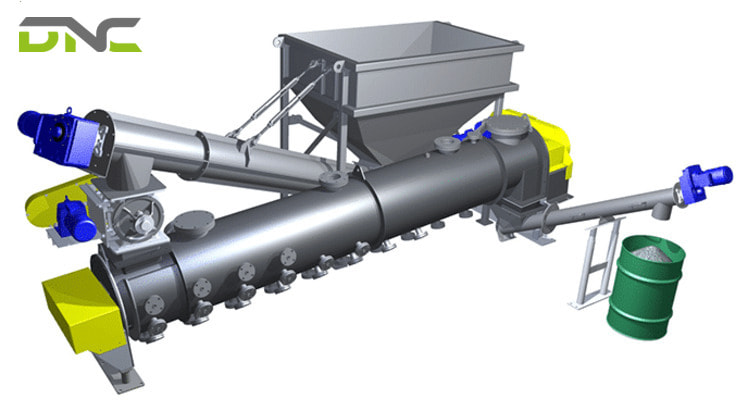
In modern industrial automation, efficient bulk material handling is critical for productivity and operational stability. Among various conveying solutions, the bucket conveyor stands out for its ability to transport materials vertically or at steep inclines while maintaining consistent flow and minimal spillage.
What Is a Bucket Conveyor?
A bucket conveyor is a mechanical conveying system designed to move bulk materials vertically or on steep inclines using a series of buckets attached to a belt or chain. These buckets scoop materials from a loading point and carry them upward or forward to a discharge location. Bucket conveyors are commonly used when space is limited, or when materials need to be lifted between different processing levels.
Compared to flat belt or screw conveyors, bucket conveyors are especially effective for handling granular, powdery, or small lump materials while minimizing product loss and maintaining controlled movement throughout the process.
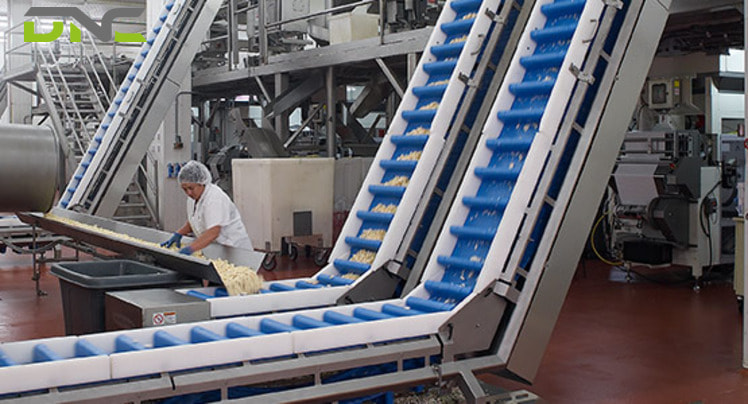
What is the bucket conveyors?
How Does a Bucket Conveyor Work?
Before exploring technical configurations, it is important to understand the basic working principle behind a bucket conveyor and how it integrates into automated material handling systems.
A bucket conveyor operates through continuous motion driven by a motorized pulley or sprocket. Buckets are fixed at regular intervals and move along a defined path to lift and discharge materials efficiently.
- Material loading at the inlet section: Bulk material enters the conveyor at the loading zone, where buckets are filled either through gravity feed or controlled dosing. Proper inlet design ensures uniform filling and prevents material overflow or uneven loading.
- Vertical or inclined transportation process: As the belt or chain moves, the buckets carry materials upward or along an incline. The enclosed or semi-enclosed structure helps prevent spillage and contamination during transport.
- Controlled material discharge mechanism: At the discharge point, materials are released using centrifugal force or gravity, depending on conveyor type. This ensures accurate unloading into downstream equipment or storage systems.
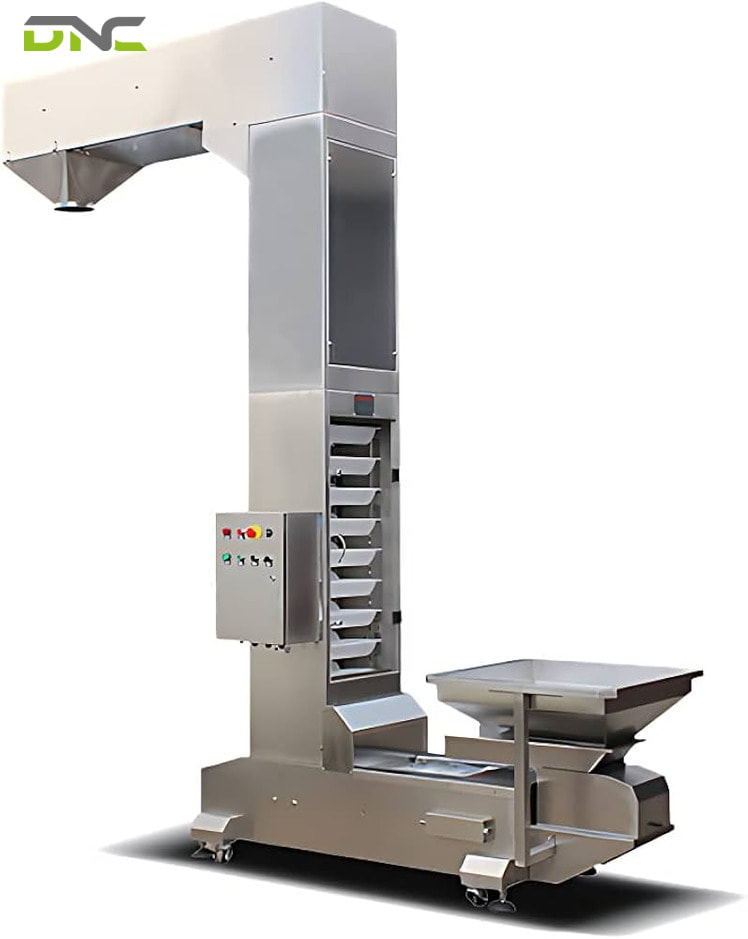
How bucket conveyor works?
In addition, the bucket conveyor is operated automatically and quickly, supporting the collection and dumping of raw materials, the device will work best in transporting dry, light, and powdery materials. Limit the use of wet materials, which can easily adversely affect the discharge capacity of the device.
How much does it cost to install the bucket conveyors?
Is the cost of a bucket conveyor expensive or cheap? This is a difficult question because many factors affect the installation cost of the conveyor such as:
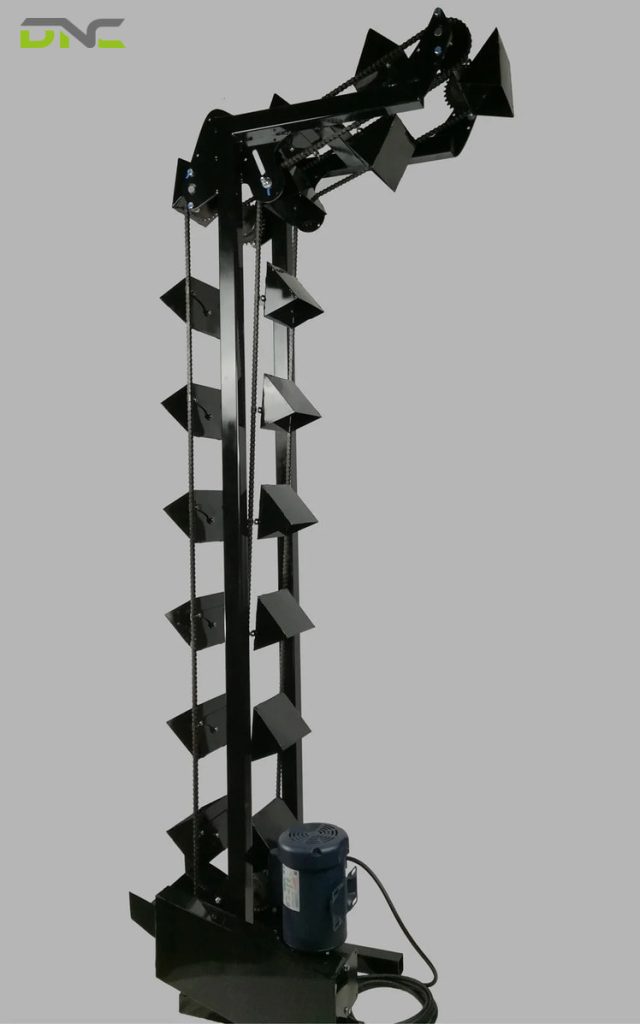
Bucket conveyor installation cost
- Components and materials used: depending on the material used for the bucket, there will be many different prices. More expensive materials such as steel and stainless steel will increase the bucket conveyor’s cost.
- Capacity and size of the chain: systems that require higher capacity and larger sizes will often come with a higher cost than those with smaller capacities.
- Maintenance and installation issues: do not rush to ignore the cost of installation and maintenance, because this is a significant expense in the total cost of the conveyor.
- Customization and design capabilities: for conveyors with complex designs and high requirements for self-adjustment, the initial investment cost will be higher.
But generally speaking, the price range for a bucket conveyor will range from $2,000 to $8,000.
What are the types of Bucket Conveyor Systems?
Bucket conveyor systems come in several designs, each tailored for specific materials and applications. The three most common types are Continuous Bucket Conveyors, Positive Discharge Conveyors, and Centrifugal Bucket Conveyors
Continuous Bucket Conveyors
The equipment is specially designed for light and fragile materials without clearance between buckets. The equipment is uniquely arranged in Z, C or S style with operating speed of about 3~5 feet per second, very effective in handling materials such as: recycled glass, sand, gravel, ore, crushed stone…
Positive Discharge Conveyors
This is considered a special type of centrifugal conveyor, moving at a slower speed of about 2~4 feet per second, minimizing spillage of raw materials. Active discharge conveyors are very suitable for handling raw materials such as grains, seeds, dried fruits… products that emphasize the integrity and quality of the product.
Centrifugal Bucket Conveyors
With its relatively high travel speed, the centrifugal bucket conveyor allows the material to be pushed out of the bucket and into the discharge hole very easily. This equipment is especially suitable for small, fine lumpy materials that can withstand being scooped out of the bucket and thrown out the discharge pipe.
What are the applications of bucket conveyors?
Bucket conveyors are widely adopted across multiple industries due to their versatility and ability to handle bulk materials efficiently.
Their vertical conveying capability makes them particularly valuable in facilities with limited floor space or multi-level processing layouts.
- Food and agricultural processing: Used for grains, seeds, sugar, and flour, bucket conveyors provide gentle handling and hygienic transport, supporting consistent production flow.
- Cement and construction materials: In cement plants, bucket conveyors transport clinker, sand, and aggregates reliably, even under harsh operating conditions.
- Chemical and mineral processing: Fine powders and granular materials benefit from enclosed conveying, reducing dust emissions and maintaining material integrity.
- Manufacturing and automation systems: Integrated into automated lines, bucket conveyors connect processing stages and support continuous, unmanned operation.
What are the outstanding advantages of Bucket Conveyors?
Like other types of conveyors, bucket conveyors bring many outstanding advantages to the production line, including:
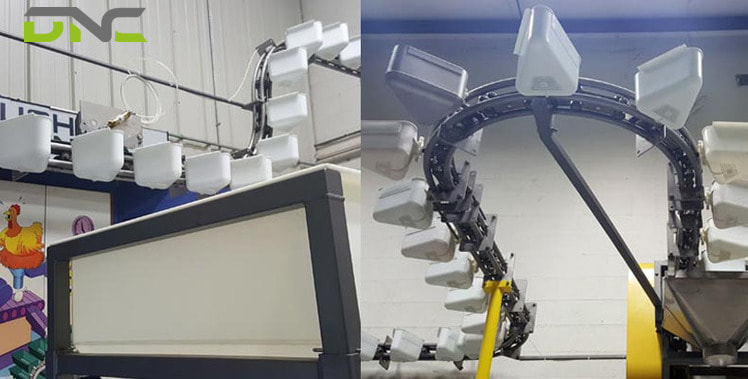
Outstanding advantages of bucket conveyor
- Innovative configuration: the device has a special appearance located in a certain vertical direction, saving warehouse space and meeting many separate requirements for many different projects.
- Easy transportation: because it is a highly automated device, with just a few simple operations, the system will operate automatically, and move large quantities of materials easily.
- Larger capacity: Depending on the size of the hopper and bucket, large buckets will be safer for transporting materials without worrying about spillage.
- Cost savings: bucket conveyors are considered a great investment for many production facilities, thanks to their self-operating ability and high endurance with outstanding performance. This is the device that helps manufacturers optimize labor costs and effectively save costs for businesses.
What should be noted during the use of the bucket conveyor?
Here are some things to keep in mind to ensure your bucket conveyor is durable and efficient for a long time:
- Regularly inspect, lubricate, and maintain the system to ensure the equipment always performs at its best.
- Follow the manufacturer’s instructions and operating methods to avoid unexpected damage.
- Contact a qualified technician or contact the manufacturer directly as soon as you notice any unusual signs of the equipment such as loud noises, malfunctions during operation, excessive wear and tear, etc.
- Experienced and qualified technicians must be present to operate and supervise the entire process.
Why Is DNC Automation a Trusted Partner for Bucket Conveyor Solutions?
Choosing the right automation partner is just as important as selecting the right bucket conveyor system. DNC Automation is recognized as a trusted partner for delivering reliable and customized bucket conveyor solutions tailored to industrial automation needs.
With deep expertise in material handling systems, DNC Automation focuses on engineering-driven design, system integration, and long-term performance. Each bucket conveyor solution is developed based on real operational requirements, ensuring optimal capacity, safety, and efficiency. From consultation and design to installation and ongoing support, DNC Automation provides end-to-end solutions that help businesses achieve stable, automated, and scalable material handling operations.
- 664 views
- 0 Comment
Recent Comments